Migrating HR or ERP Data?
Maintain full access to your data while sunsetting legacy systems with Fuse Analytics.
Learn the many benefits in our Executive Data Sheet:
Compatible with ALL HCM & Payroll applications including:





A SaaS for your enterprise legacy people data
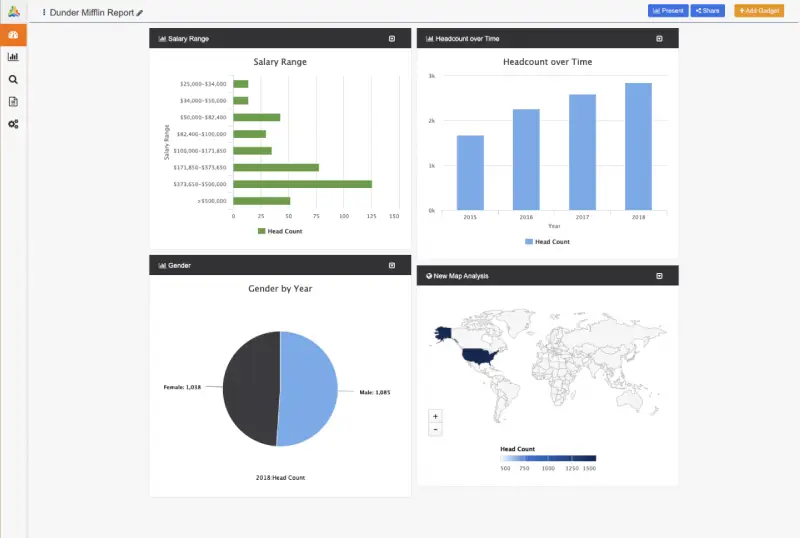
If you are planning to migrate a HCM or HR & Payroll system, or have recently done so, what do you plan to do with your legacy data? Many companies fail to realize that important & legally required records get lost; either physically, or in a sea or unorganized data that requires IT days to uncover. Fuse Analytics deploys a hybrid warehouse overnight, in the cloud, securely and at a fraction of the cost of home-brew solutions.
Simplify Your Data
Whether it is multiple systems from upgrades or corporate mergers having multiple HCM and other human resource systems destroy your productivity. Learn how data archiving can simplify your landscape and increase your teams productivity by simplifying.
Secure Your Data
Human Resources data is sensitive data that must be secure. Fuse Analytics gives you the tools to ensure your data is protected with Role based access, end to end encryption, and features that enable you to easily comply with regulations.
Analyze Your Data
Big Data for people analytics is consolidation of all of the data in one place. What holds you back is inability to use all of your data to analyze and make decisions. Find out how Fuse Analytics enables real Big Data for Human Resources.
Enterprise features:

Archiving

Analytics

Self Service

PII Lifecycle Management
Browse our blog about storing and managing People Data
HR and Payroll Data Retention & Archiving Compliance
Switching HR or Payroll vendors requires you to have a data retention strategy for the data left in your legacy system. Federal regulations require you to retain this legacy data, but there are many regulations that cover this data. It is common practice to leave old...
Chatbots in HR: The Future of Workforce Engagement
We are very excited about the future of AI here at Fuse. With our long record of helping customers make sense of massive amounts of unstructured data there are limitless features on the horizon. Have a chat with Sam@Fuse (buttons below) who is just small working...
Culture, Communication, and Engagement
If it isn’t broken… Don’t fix it… but how do you know if your culture is broken? What do you do even if you know it is? Where Workforce Analytics meets traditional Organizational Dynamics often can be the roadmap to improving your culture, diversity and in turn...
Understanding New Hires vs Total New Hires
In another post we discussed the difference between terminations and total terminations. There is similar concept on the hiring side with a twist. I'm going to cover that same topic on the hiring side by looking at new hires and total new hires, but I am going to go a...
Migrating? Take our free
Risk Assessment Questionnaire.
A well thought out evaluation and planning strategy before engaging vendors is critical to a smooth transition.
Take our 5 min Risk Assessment Questionnaire to:
- Deep dive with your internal organizational & stakeholder requirements before engaging a vendor.
- Build a standard evaluation methodology on which to measure all vendors equally against your requirements.
- Make the most informed, quantifiable decisions on your next generation application landscape, data integration and archiving options.
Want to see it in action and speak with a migration expert?
Ready to move forward?
Download Our Whitepaper:

+1 212.377.6018
sales@fuseanalytics.com
support@fuseanalytics.com